
Display logic

Introduction

Display logic controls the visibility of questions, blocks, or list items based on conditions you define. Once a condition is applied, the element is hidden by default and only shown when the condition evaluates to true.

For example:

If Age < 18 → Show Q1

Q1 will only appear when the respondent's answer to the Age question is less than 18.

Conditions

Conditions work the same way as skip logic, using the dropdown logic builder to define:

  • Data source: The question or variable providing the data.
  • Operator: The comparison to apply (e.g., includes any, is answered).
  • Values: What to compare against.

See the Skip logic article for a detailed walkthrough of the logic builder.

Applying display logic

To add Display logic to a question or block:

  1. Click the Display logic tab on the element.
  2. Click + Display logic.
  3. Configure the Condition using the logic builder.
Display Logic Settings in Discover

The element will only appear to respondents when the condition evaluates to true. To add display logic to a list item, see Item display logic below.

Use cases

Display vs. Skip logic

Display logic can be a simpler alternative to skip logic in some cases:

  1. Simplicity: A hidden question only needs one condition to show. Skip logic may require multiple conditions to achieve the same result.
  2. Portability: Display logic travels with the question — if you move it, the logic moves too. Skip logic is a separate element and must be manually updated when the survey flow changes.

That said, skip logic is more efficient when skipping respondents across multiple questions or pages. Reserve display logic for controlling visibility of individual questions or blocks, and use skip logic for navigation.

Page-level behavior
If a question with display logic is the only content on a page and its condition evaluates to false, the entire page is skipped for that respondent.

Show or hide questions on the same page

To reveal a follow-up question based on an earlier answer on the same page:

  1. Add both questions to the same page.
  2. On the second question, configure a display logic condition referencing the first question.

The second question stays hidden until the condition is met.

Item display logic

Display logic can also show or hide individual list items within a question based on responses from other questions. Note that item display logic can't respond to selections made within the same question — only to responses from elsewhere in the survey.

Applying item logic

Open the options menu (More Menu) on a list item and select Item display logic.
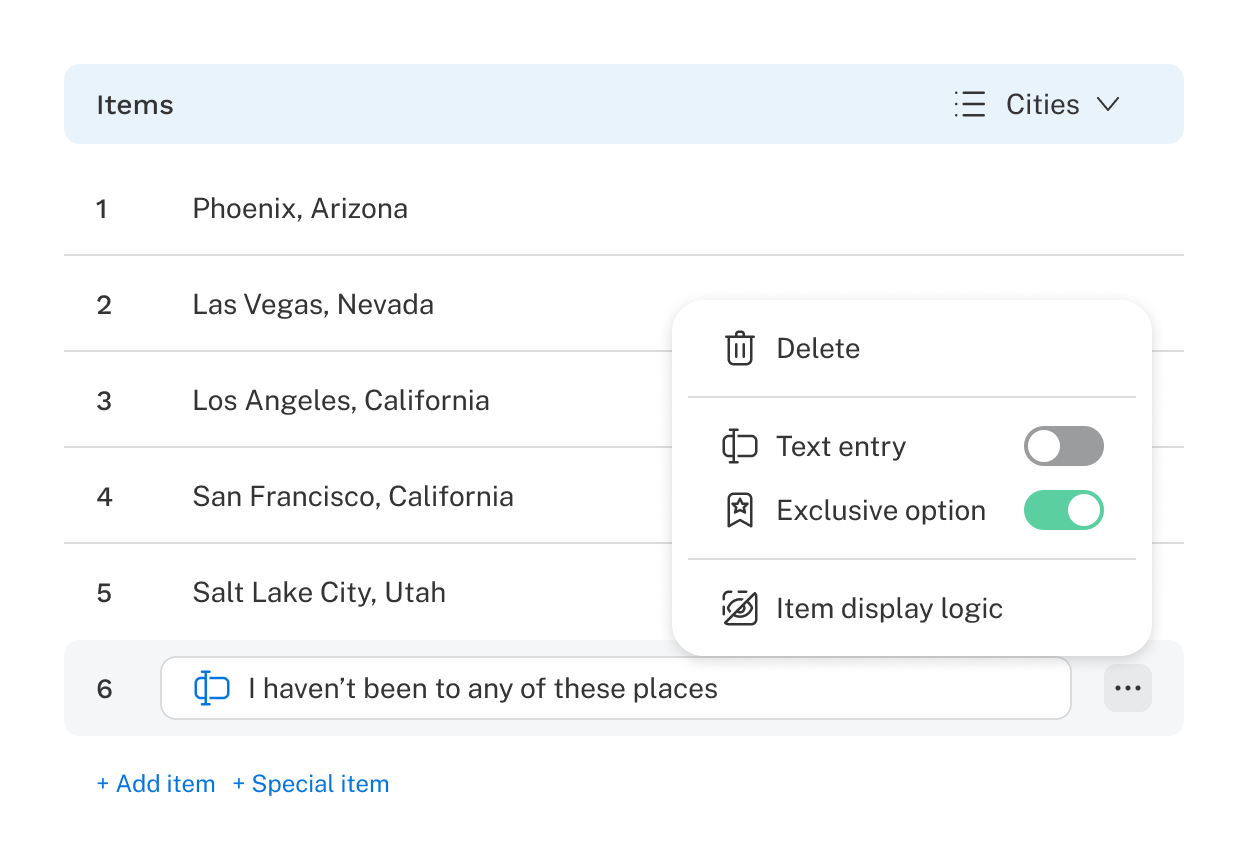
Special Items menu in discover
Item display logic is scoped to the current question; it won't carry over to other questions if the list is reused.

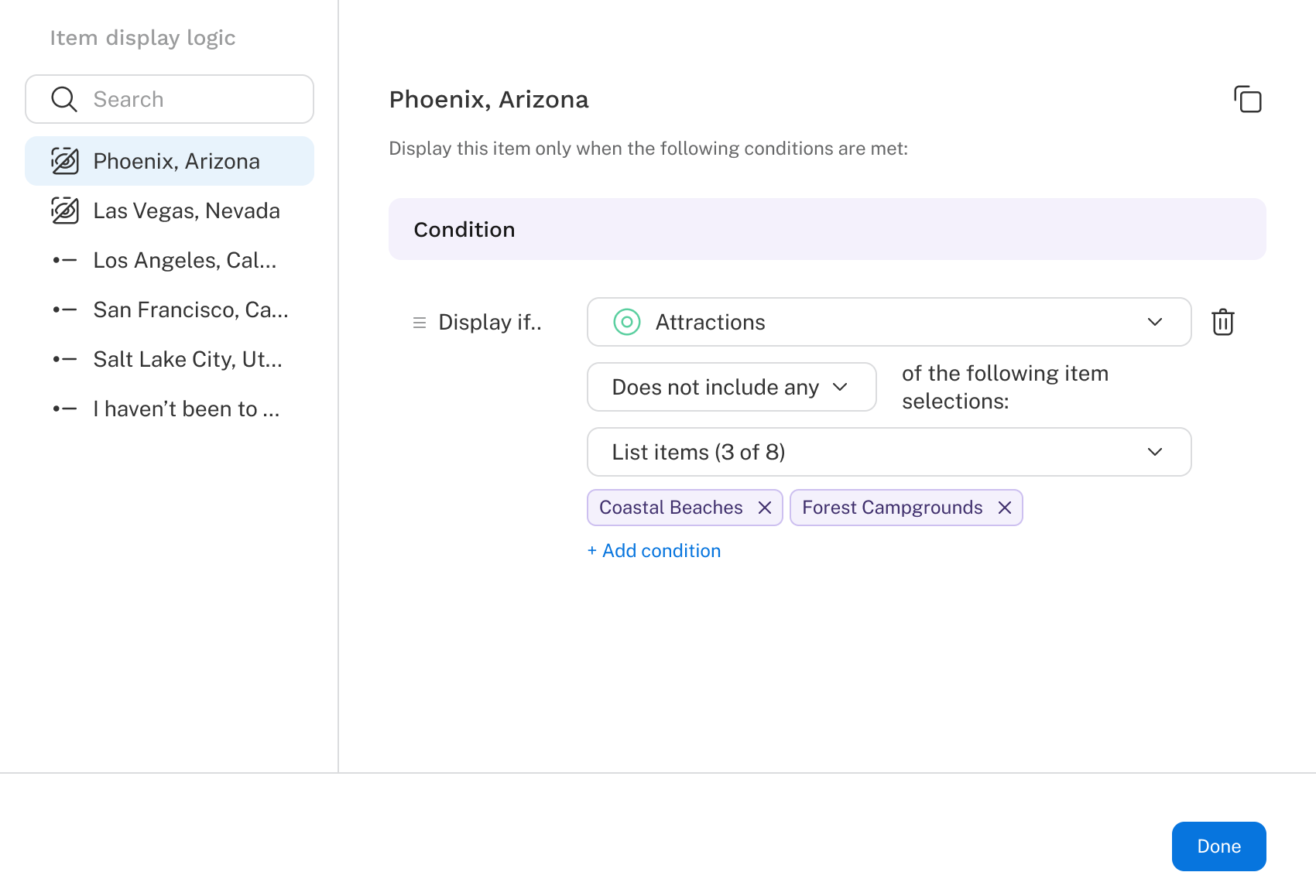
This opens the item display logic manager for that question, where items appear in the left panel and conditions are configured on the right.

Item Display Logic Manager  Help

When item display logic is active, the survey records which items were shown to each respondent. This is saved in your data export as [QuestionName]_ItemsDisplayedList, formatted as a comma-separated list of item numbers.

Items shown variable

When item Display logic is applied to a question, the survey records which items were displayed to each respondent. This information is saved in the survey data download under a column labeled [QuestionName]_ItemsDisplayedList.

The data is formatted as a comma-separated list of item numbers corresponding to the items shown to the respondent.